Sustainability
We are committed to supporting the public service to operate sustainably by using resources wisely to deliver long-term value and enhance operational efficiency. We see this is an opportunity to rethink how we use resources, making better decisions for our planet and people, carefully balanced against fiscal outcomes and delivering our services to the people of New Zealand.
Our climate commitment
We stand firmly behind the Government’s pledge to take urgent action on greenhouse gas mitigation and climate change adaptation. Through initiatives like the Carbon Neutral Government Programme (CNGP), we are actively implementing strategies to meet these commitments.
Te Tari Taiwhenua has embraced the ambitious goals set by the CNGP (from our 2022/23 base year):
- 12% reduction by 2025
- 42% reduction by 2030
Performance against our 2025 Target
The Department reports emissions from departmental and non-departmental activities. Departmental activities include the Ministry for Ethnic Communities, a departmental agency hosted by the Department. Non-departmental activities include travel by Members of the Executive and approved accompanying parties and the operation of Ministerial properties (e.g. Premier House).
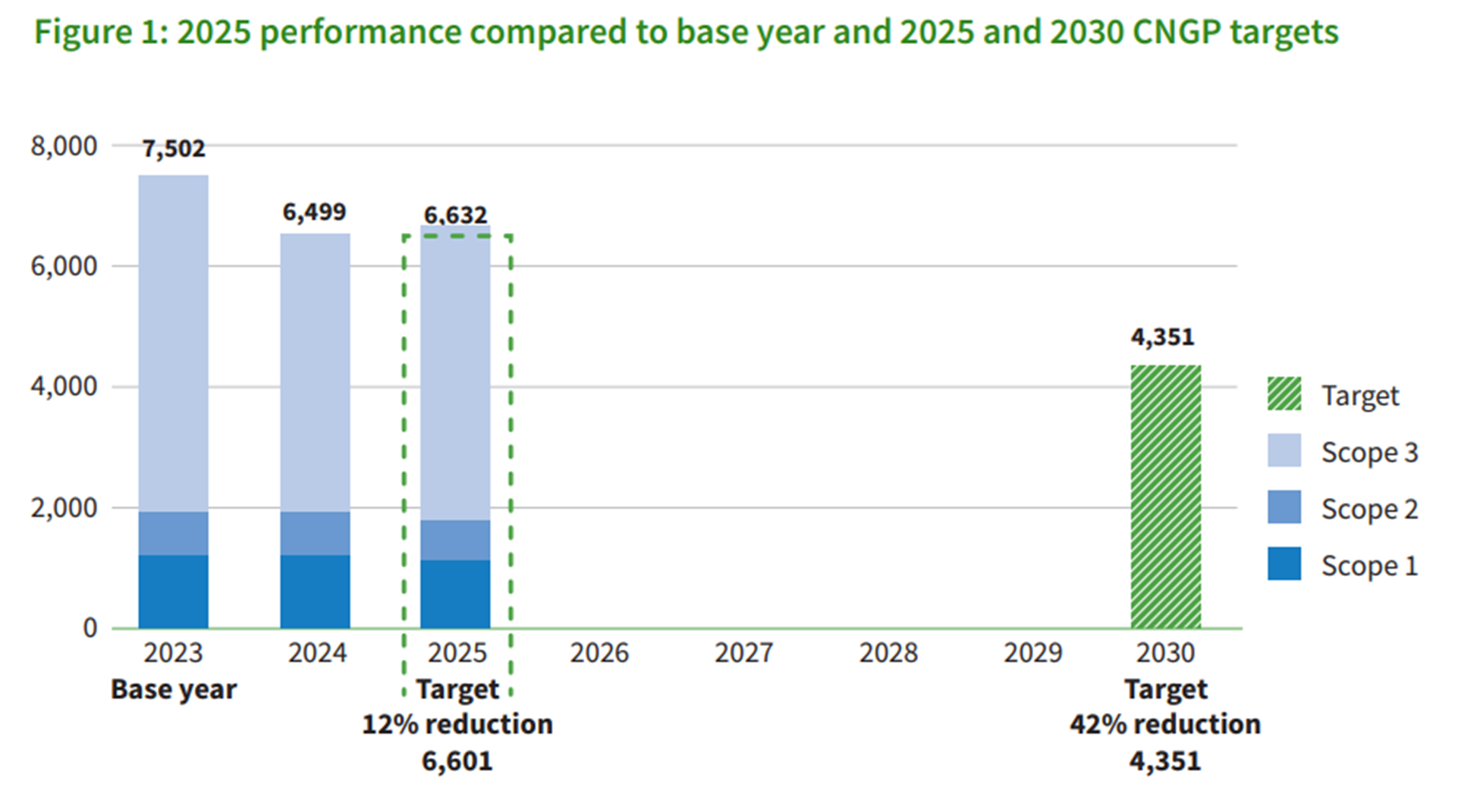
2024/25 marked the Department’s first CNGP target, requiring a 12% reduction in gross emissions from the base year. The Department tracked closely to this target throughout the year and while we achieved a rounded 12% reduction, we narrowly missed our specific target by 31 tCO₂e. The shortfall was due to changes in emissions factors for electricity and freight which added 621 tCO₂e to our total. These types of emissions factor adjustments are common and can either benefit or disadvantage reported outcomes, depending on the nature of the revisions.
Notably, departmental air travel emissions have reduced by 48% and vehicle emissions (Fleet) reduced by 26% since base year following deliberate intervention and buy in from kaimahi. Energy reduction will be crucial for the Department to meet its 2030 target and will require deliberate decisions around property strategy as well as investment.
The biggest source of non-departmental emissions is ministerial travel which is largely demand driven and relates to delivering on Government priorities. Travel volumes are impacted by the size of Members of the Executive and base locations, government priorities, and the cyclical nature of the general elections. In 2024/25, the Department purchased 1,276 carbon credits through Toitū Envirocare to offset emissions from Ministerial travel
Continuous Improvement
We continue to refine our data collection and reporting processes to enhance accuracy and transparency. By empowering kaimahi with knowledge, tools, and data-driven insights, we enable informed decisions and deliberate action to reduce carbon emissions. Our policies and processes are periodically reviewed to ensure carbon considerations are embedded in everyday operations.
Reducing emissions not only improves operational efficiency but also transforms how we use resources—helping us make better decisions for our planet and people, while balancing fiscal responsibility and service delivery.
For more detailed information on our carbon refer to our Annual Report Appendix C (pg182-184)
Stay informed about the government’s carbon neutral progress:
Tracking progress Carbon Neutral Government Programme (Ministry for the Environment website)
Return to About Internal Affairs
